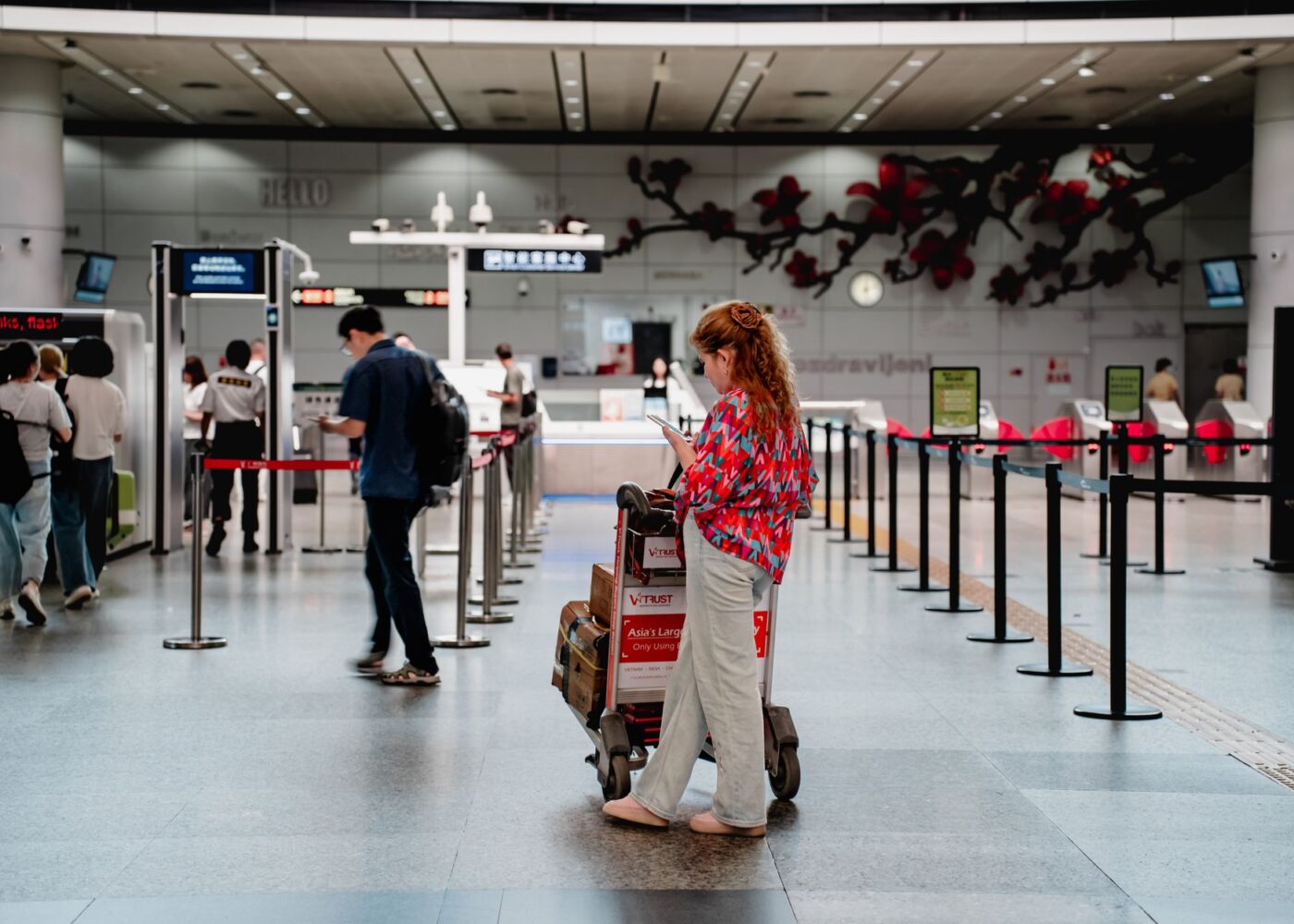
Delta started charging $45 for a first checked bag on domestic flights booked on or after April 8, up from $35, and United and Southwest moved their first-bag price to $45 within days of it. If you are booking a summer trip right now, those hikes matter more than any resort fee. The federal crackdown on hidden travel fees that took effect in May 2025 covers your hotel and leaves your airline bag fees almost exactly where they were. A family of four checking one bag each will pay $360 in bag fees on a round trip, and no rule requires that number to show up next to the fare you compare.
The fix is to price the whole trip yourself, because the rules now cover only half of it.
What the FTC junk fee rule actually fixed for hotels and rentals
The Federal Trade Commission’s Rule on Unfair or Deceptive Fees took effect on May 12, 2025. For hotels, motels and vacation rentals, it requires the price you see first to include every mandatory fee the business knows about, and that all-in number has to be the most prominent price on the page. The FTC’s own business FAQ uses a hotel advertising a $199 nightly rate with a mandatory $39 daily resort fee as its example: the $39 belongs in the headline total. A required cleaning fee on a vacation rental goes in the total too.
What the rule does not do is ban anything. The FTC said plainly when it announced the rule in December 2024 that it “does not prohibit any type or amount of fee.” Resort fees still exist. You just see them sooner. Balboa Bay Resort in Newport Beach, California, was charging a $40 daily resort fee the week the rule kicked in, and when CNBC checked 10 booking sites for a two-night stay there, three of them still did not show it.
Read the rule closely and two holes show up. Taxes and other government charges can stay out of the headline price, as long as they are disclosed before you pay. Optional add-ons can stay out as well, and whether something like parking counts as optional depends on the facts. So the “total” a hotel shows you is really the total before tax and before anything the property can argue you chose. That is better than it used to be. It is still not the number that hits your card.
Airline bag fees answer to DOT, and DOT’s rule is gone
Airlines are not covered by the FTC rule at all. Airfare advertising is regulated by the Department of Transportation, which has required “full fare” pricing for years, meaning the fare you see has to include taxes and every mandatory carrier charge. Ironically, that makes the base airfare more honest than the hotel headline, because the hotel can still leave tax off.
The problem is that checked bags are not mandatory, so they never had to be in the fare. In April 2024, DOT finalized a rule requiring airlines and ticket agents to show first and second checked bag fees, carry-on fees, and change and cancellation fees upfront, the first time a fare search would have had to put those numbers in front of you before you bought. DOT estimated it would save travelers more than $500 million a year.
That rule never took effect. Airlines sued, and the Fifth Circuit paused it in July 2024. A three-judge panel ruled in January 2025 that DOT could redo the rule, but the full court wiped out that decision in October 2025 and took the case itself. In early February 2026 the full Fifth Circuit threw the rule out entirely, finding that DOT skipped required notice-and-comment steps. The current DOT had already said it planned to redesign or rescind the rule, so as of early May 2026 nothing is pending that would put bag fees next to your fare this summer. You are back to the older standard, under which the first screen showing your itinerary has to say that bag fees may apply and tell you where to look them up.
Bag fees are now the biggest hidden travel fees for families
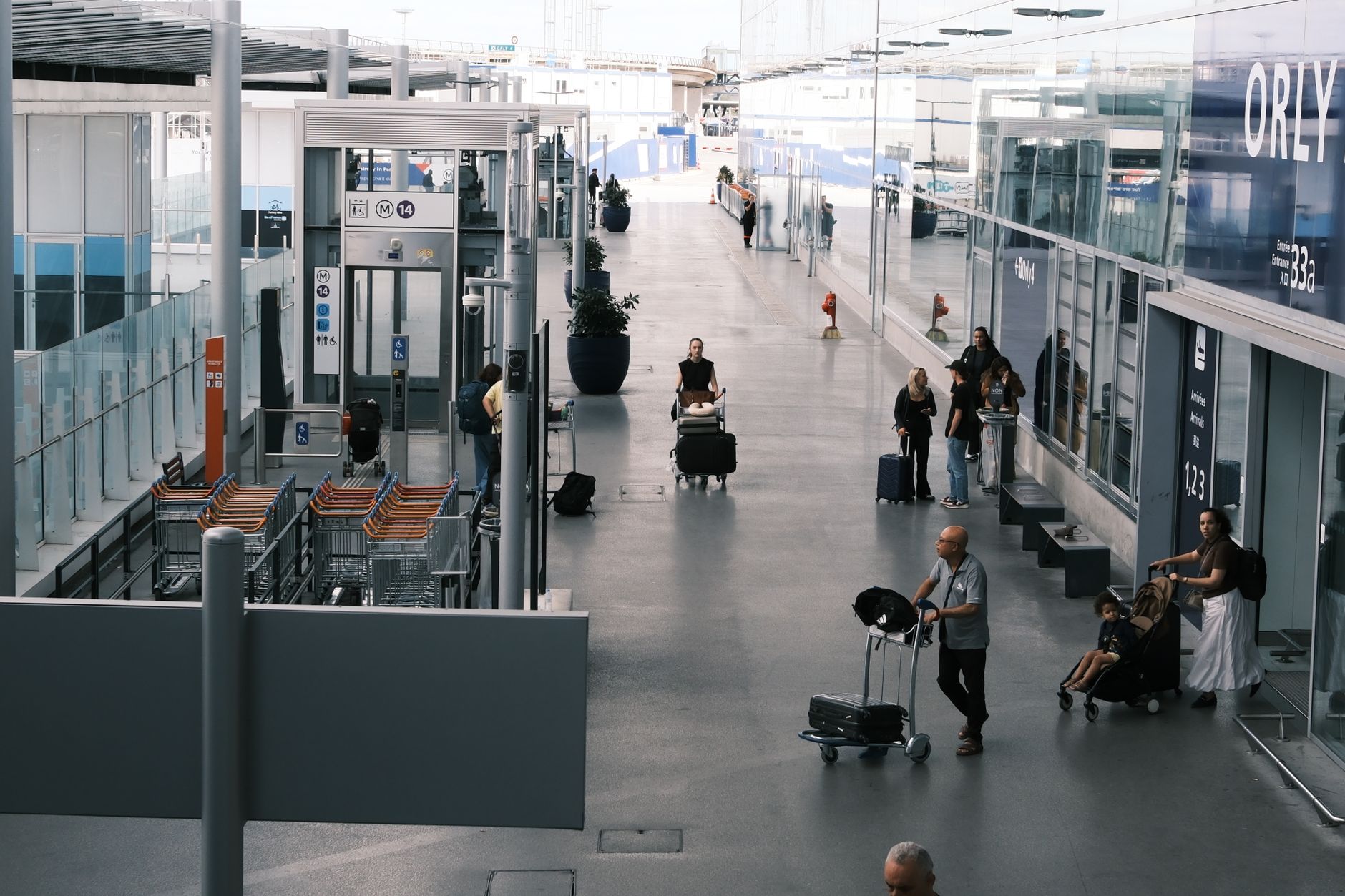
Airlines have every reason to keep those fees off the fare screen. The Bureau of Transportation Statistics reported that U.S. airlines collected $7.3 billion in baggage fees in 2024, and $2.0 billion in the third quarter of 2025 alone, when bags made up 3.1% of airline operating revenue. That was before this spring’s hikes.
There is also a quirk in how fare data gets reported that keeps bag costs out of sight. The BTS average domestic fare for 2025, released April 24, was $387, and the BTS release says that figure excludes optional services “such as baggage fees, seat upgrades, and selecting an assigned seat.” So the government’s own benchmark for what flying costs leaves out the line item that grew fastest this year. If you compare fares against that $387 and feel good, you have compared the wrong numbers.
Run the total trip cost before you book

Here is a hypothetical summer trip priced the way you actually pay for it. A family of four flies round trip at the 2025 BTS average fare of $387 per ticket and stays four nights at a hotel advertising a $259 room rate with a $40 nightly resort fee, the same fee Balboa Bay charged. Each person checks one bag each way at Delta’s new $45 first-bag price.
| Line item | Math | Cost |
|---|---|---|
| Airfare | 4 tickets x $387 | $1,548 |
| Checked bags | 4 bags x 2 flights x $45 | $360 |
| Hotel room | 4 nights x $259 | $1,036 |
| Resort fee | 4 nights x $40 | $160 |
Four tickets at $387 come to $1,548. Eight checked bags (four people, two flights) at $45 add $360, which is 23.3% on top of the airfare. Four nights at $259 is $1,036, and the $40 resort fee adds $160, about 15.4% on top of the room. The trip totals $3,104 before hotel taxes.
Before the FTC rule, $520 of that total (the $360 in bags plus the $160 resort fee) could have been missing from the prices you compared. Now the hotel has to show the $160 upfront, so the hidden share drops to the $360 in bags, about 11.6% of the trip. In other words, the rule fixed the smaller of the two leaks. And because Delta’s first bag was $35 until April 8, the same eight bags would have cost $280 last summer, so this year’s increase alone adds $80.
Where the fine print still lets you cut the bill
The cheapest bag fee is the one you avoid entirely, and that is mostly a packing decision. If the same family consolidates into two checked bags instead of four, the bag bill drops from $360 to $180. If everyone fits in carry-ons on an airline that includes a full-size carry-on in the fare, it drops to zero. Check which fare class you are buying first, because basic economy rules on carry-ons differ by airline.
Look at what you already carry in your wallet, too. When Delta raised prices this April, it left free checked bags in place for eligible Delta SkyMiles American Express cardholders, Medallion members and active-duty military. If a card you already hold gets your family’s bags waived on a $360 trip, that perk is worth more this summer than it was last year, so read your card’s benefits page before you pay at the counter. Opening a new card just for a single trip is a different calculation, because annual fees often eat the savings.
Seat maps are the other place to watch. DOT’s vacated rule would have made airlines say plainly when a seat assignment already comes with your fare, and that requirement died with the rest of it. If your fare includes a free assignment at check-in and your family can live with whatever seats are left, skip the paid seat map.
On the hotel side, the rule helps you most if you actually compare all-in totals instead of nightly rates. When a booking site still shows a lower number than the hotel’s own site, assume the lower number is missing something and check the final screen before you pay. If a mandatory fee shows up at checkout that was not in the advertised total, you can report it to the FTC and your state attorney general, and keep a screenshot of the price you were shown. For a full-year view of where travel fits in your spending, a realistic budget that has a line for trips beats paying for summer on a credit card in August.
The number to watch this summer
The junk fee rule did its job on hotels: resort fees now have to be in the price you see first. The hidden travel fees that survived are the ones airlines charge, and this spring they went up while the federal rule that would have exposed them was thrown out in court. Price the whole trip, bags included, before you commit. If your bag line is bigger than your resort fee, as it is in the example above, that is the line to attack first, and our list of ways to cut monthly expenses has more places to find the money if the total still runs high.
Sources: FTC, U.S. Department of Transportation, Bureau of Transportation Statistics, CNBC

[…] Hotel blocks, resort fees and parking can add more than you’d expect, and the earlier post on hidden travel fees like resort and bag fees walks through which ones show up after checkout. Treat the wedding money the same way you’d […]
[…] the true cost of the trip, including the fees that never show in the headline price; the rundown of hidden travel fees like resort fees and bag fees is a good […]